
Substructure
The foundation of every deck we build
The substructure is the most critical component of any deck system. While it remains largely hidden once construction is complete, it determines how solid the deck feels, how well it performs, and how long it lasts. Issues such as movement, noise, premature wear, and many structural failures almost always originate in the framing below the surface.
At Witter Construction, we treat the substructure as a fully engineered system — not a place for shortcuts. Every material and method is selected with long-term durability, safety, and performance in mind.
Code-Minimum Construction vs. Our Standard
Building codes establish the minimum requirements for safety, but they do not account for long-term performance, comfort, or material-specific needs. Many decks are framed to pass inspection and little more.
Common code-minimum practices often include:
Framing sized to meet minimum span requirements
Limited protection against moisture at critical connection points
Fasteners and hardware selected primarily for cost or speed
Our standard goes beyond these minimums. We design substructures to support the finished deck system as a whole — accounting for material performance, environmental exposure, and long-term stability.
our substructural standards
Structural Framing
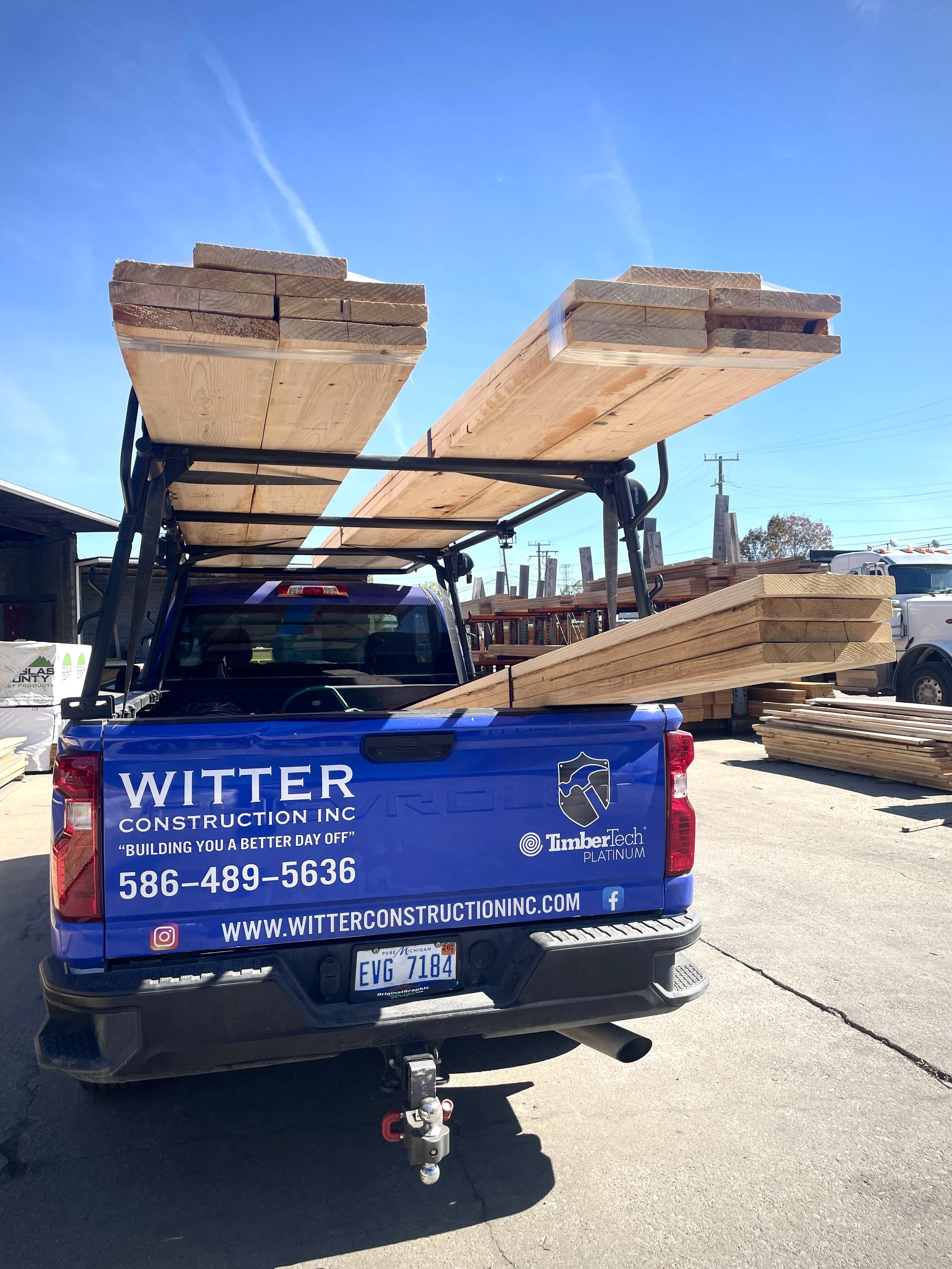
We use pressure-treated Southern Pine for all primary structural framing. This material is selected for its strength, durability, and suitability for exterior structural applications.
Joist sizing and spacing are intentionally designed to:
Reduce deflection and movement
Provide proper support for composite and PVC decking
Create a solid, comfortable walking surface
Framing layouts are planned around the finished deck design rather than treating the decking as an afterthought.
Posts & Footings
Structural posts are set with longevity and stability in mind.
Our standard practices include:
4 × 6 pressure-treated pine posts
Installed a minimum of 42 inches below grade to reach below frost depth
Proper soil backfill and compaction to improve drainage and reduce settling
Synthetic Post Pads (Our Standard)
All structural posts are set on engineered synthetic pads, which distribute load evenly while reducing long-term moisture exposure at the base of the post — one of the most vulnerable areas of a deck’s structure.
How We Use Synthetic Pads:
Pads are placed at the bottom of the excavation on undisturbed soil
Posts are set on top and backfilled with compacted soil
Pads allow water to drain naturally around the post instead of pooling
Why We Use Synthetic Pads:
Traditional concrete footings meet code requirements but can trap moisture at the post base, which may contribute to rot over time. Synthetic pads provide:
Improved moisture management and drainage
Reduced rot risk at ground-contact points
Even load distribution across the soil
No curing time, allowing efficient construction
Less disturbance to surrounding soil
By using synthetic pads as our standard, we create a stable, durable base while addressing one of the most common causes of substructure failure.
Fasteners & Hardware
The strength of a deck depends heavily on the quality of its connections.
We use:
Galvanized carriage bolts for structural connections
Steel joist hangers and connectors designed for exterior structural use
Corrosion-resistant hardware compatible with pressure-treated lumber
This ensures structural integrity and reduces the risk of premature fastener failure in outdoor conditions.
Moisture Management & Rot Prevention
Moisture is the leading cause of structural deterioration in exterior framing. Our standard construction methods focus on minimizing exposure at critical points and creating a foundation that performs over the long term.
Key practices include:
Engineered synthetic pads: Posts sit on synthetic pads that promote drainage and limit prolonged soil contact.
Proper soil backfill and compaction: Excavated soil is carefully backfilled and compacted to direct water away from posts and maintain stability.
Material selection: Pressure-treated Southern Pine and corrosion-resistant fasteners ensure durability in outdoor conditions.
Integrated design: Framing is arranged to minimize water retention around connections and promote airflow, keeping structural elements dry.
By combining these measures, we create a substructure that remains strong, stable, and resistant to decay — not because of depth alone, but because of the way every component works together.
Optional Substructure Protection Upgrades
For homeowners seeking maximum longevity and protection, we offer additional substructure protection options that go beyond our standard construction practices.
Substructure Protection System
This upgrade includes:
Wrapping structural posts with waterproof butyl tape extending approximately 8 inches below and above grade
Applying butyl tape to the top of joists and framing members
Why Butyl Tape Matters
Seals exposed fastener holes: Even on new decks, small punctures or gaps in the framing can allow moisture to collect. On re-decks or resurfacing projects, the risk is greater — we remove all old nails rather than just cutting them off, leaving numerous holes where water could enter. Butyl tape seals these areas, protecting the wood from moisture intrusion.
Protects high-exposure areas: Posts near the ground and top framing members are particularly vulnerable. Wrapping these with butyl tape creates a durable, waterproof barrier against water exposure.
Enhances long-term durability: Combined with pressure-treated lumber and synthetic pads, butyl tape adds an extra layer of protection at critical points, helping maintain the integrity of the substructure.
Ideal for re-decks / resurfacing: Older decks can have hidden weaknesses from years of wear. This upgrade specifically addresses those areas, giving added confidence that the new decking is supported by a well-protected foundation.
By combining these measures, the Substructure Protection System significantly reduces the risk of rot at high-exposure points, helps maintain structural integrity, and ensures your deck continues to perform beautifully for years to come.
Integrated Construction
Substructure framing is designed as a unified system that supports:
Stair structures
Railing posts
Planned lighting pathways
By integrating these elements during framing, we improve structural performance, safety, and visual consistency while avoiding the compromises that come with retrofitting.
Typical Framing Configurations
Framing is selected based on deck size, height, layout, and the materials being installed. Common configurations include:
Structural Posts:
4 × 6” if less than 4’ above grade, anything taller gets 6 x 6” pressure-treated southern pine posts on synthetic pads set 42’’ below grade
Beams:
Doubled 2 × 10” pressure-treated southern pine beams
Joist Framing:
2 × 8” pressure-treated southern pine at 12” on center
2 × 8” pressure-treated southern pine at 16” on center
Each deck is evaluated individually to determine the configuration that provides the best combination of strength, durability, and performance.
Materials We Use
Our substructure/Framing systems typically include:
Pressure-treated Southern Pine structural lumber
Galvanized carriage bolts and corrosion-resistant fasteners
Galvanized framing nails & composite deck screws
Steel joist hangers and structural connectors
Synthetic post pads and properly compacted soil backfill
Material selection is always aligned with the deck design, site conditions, and performance requirements.
What This Means for Your Deck
A properly built substructure creates a noticeable difference in how a deck feels and performs over time. Homeowners benefit from:
Reduced movement and bounce
Improved durability of decking, railing, and stairs
Fewer long-term structural issues
Increased lifespan of the overall deck system
Confidence in what’s built beneath the surface
Planning Ahead
Many features — including integrated lighting, railing systems, and future upgrades — rely on decisions made during substructure construction. Planning these details early allows for cleaner installations and avoids the limitations of post-construction modifications.
Our Approach
The substructure is where durability begins. By using proven materials, intentional construction methods, and thoughtful planning, we create a foundation that supports every aspect of the deck — now and for years to come.